Friday, February 20, 2009

GM Cuts off Saab, Says Opel needs $2.3 billion

The New York Times reports that General Motors subsidiary Saab filed for bankruptcy protection in Sweden in this morning. The Swedish car manufacturer is hoping to restructure itself as an independent entity.

Earlier this week General Motors told the treasury department that it had hoped to offload Saab by 2010 as part of G.M.'s restructuring plan.

Saab is G.M.’s worst-selling brand in the United States, selling 21,383 vehicles in 2008, down 34.7 percent from 2007. Its best selling vehicle is the 9-3, of which G.M. sold just over 10,000 cars last year.

By filing for bankruptcy protection Saab is hoping the Swedish government can generate enough financing for Saab so that it can restructure itself into a viable independent entity within three months. Saab, as well as all Swedish auto mobile manufacturers have access to loan guarantees stemming from a support package the Swedish government passed last December.

Meanwhile G.M.'s German subsidiary Opel announced that it would need an additional $2.3 billion from the German government as Opel attempts to restructure itself. Opel is G.M.'s second largest brand behind Chevrolet.

The question now becomes will Saab's filing for bankruptcy and Opel's bid to seek an additional $2.3 million effect the Treasury Department's decision to grant G.M. an additional $9.1 billion in government loans. Read More......

Thursday, February 19, 2009

Is Senator Phil Gramm to Blame for the Financial Crisis?

Time Magazine's website posted an interactive article where readers can vote on which of 25 people are the most to blame for the Financial Crisis. Senator Phil Gramm is one of the choices and is currently in the lead for the most blameworthy.

The article nominates him because he co-authored the Gramm-Leach-Blilely Act which repealed the Glass-Steagall Act. The latter Act "separated commercial banks from Wall Street" and intended to make commercial banks more careful with it's depositor's money. Further, the Time's article cites Gramm for legislating against letting the Commodity Futures Trading Commission "regulate over-the-counter derivatives like credit-default swaps" which brought down AIG.

But is this criticism fair? Congress passed this legislation nearly 10 years ago. It allowed American banks to compete with foreign banks that did not have Glass-Steagall walls. And it worked. Can we pin the Financial Crisis on him because he moved for deregulation? Should he have foreseen this perfect storm? Could he have even anticipated it? Or is he just a fall guy?

The Financial Crisis might not have happened if Glass-Steagall was still around, but what would have happened if it remained in place? To my knowledge no one has introduced legislation to bring back Glass-Steagall. As for credit default swaps, should the CTFC regulate them now or has the market learned its lesson?

Going forward, pinning the blame on someone does not solve any problems. More regulation may be necessary, but I am concerned that there will be too much of it.
Read More......

UBS to Reveal Secret Account Information to IRS, Pay $780 Million

UBS AG has reached an agreement of deferred prosecution with the United States Internal Revenue Service after allegedly conspiring to defraud the United States by helping between 17,000-19,000 Americans hide accounts.

The terms of the deal require UBS, Switzerland's largest bank, to provide the IRS with identities and information of accounts, including 250 identities disclosed immediately, as well as a $780 million dollar payment. UBS has 18 months to comply with these terms, help prosectuors, and reform business practices or they face indictment. If UBS complies, the charges will be dropped at the end of the 18-month period.

It is estimated that UBS has helped hide $20 billion and has aided in Americans evading $300 million per year in taxes from 2002-2007.

UBS has also agreed to charges from the Securities and Exchange Commission of acting as an unregistered broker-dealer and investment advisor for Americans.

For more details:
The NY Times
WSJ Law Blog
The Guardian
Business Mirror
Read More......

Wednesday, February 18, 2009

Major Changes Brewing for the Futures & Derivatives Markets

Jim Hamilton reports that the House Agricultural Committee has approved legislation that would dramatically alter the regulation of the futures and derivatives markets. The legislation includes numerous provisions, and a few are worth highlighting.

First, the bill would give the Commodity Futures Trading Commission (CFTC) authority to initiate and conduct criminal litigation for violations of the Commodity Exchange Act if the US Attorney General has declined to bring criminal proceedings. Currently the CFTC and SEC only have the authority to initiate civil litigation for violations of their respective Acts, and can only recommend criminal proceedings to the DOJ. Thus, this expansion of the CFTC’s authority would give the agency a much more powerful presence in the futures and derivative markets.

Second, the bill would limit speculative position limit exemptions to “bona-fide hedgers” (i.e. those futures market participants seeking to hedge their price exposure to commodities stemming from production or consumption of those commodities). An important effect—and the probable aim—of this change would be that commodity swap dealers would no longer be exempt from position limits, and commodity index funds and other funds that enter the futures markets through these dealers would in turn be subjected to position limits. The imposition of these limits on commodity funds could potentially reverse the influx of investors into futures that has occurred in the last few years which many believe has led to “excessive speculation”, increased volatility, and artificially high prices.

Third, the bill contains a number of provisions geared towards reining in the unregulated credit default swap market. These provisions give the CFTC the authority to require mandatory clearing of CDSs at CFTC regulated exchanges and to temporarily ban both regular and “naked” CDSs under certain circumstances. While these and other provisions in the bill are still in very early stages, what is clear is that Congress will be very aggressive in pursuing major regulatory changes in the futures and derivatives markets, and we are likely to see equally aggressive legislation for the capital and banking markets in the near future.
Read More......

Tuesday, February 17, 2009

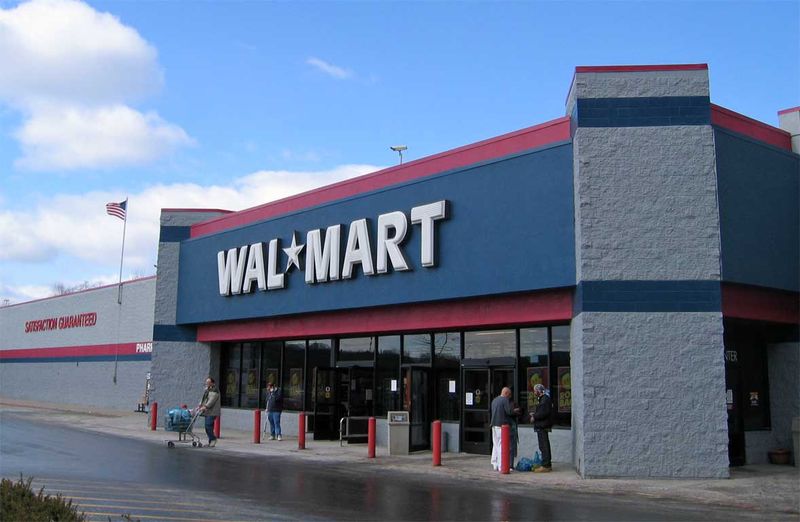
Wal-Mart's Historic Class-Action Suit Revisited

The WSJ Law Blog just posted some interesting news about Wal-Mart. In the financial sector, the WSJ just reported that Wal-Mart's fourth-quarter net income fell 7.4 percent. Still, the bigger news may be that the Ninth Circuit recently agreed to reconsider whether the sexual-discrimination lawsuit against Wal-Mart should proceed as a class-action.

In the 2007 ruling, a 2-1 panel majority held that more than 1.5 million female employees could join the suit against Wal-Mart. Although this class size was "historic," the majority found that "the issues were not unusual."

However, this ruling - along with the concerns of the panel's dissent - will be revisited. Indeed, the dissent made a compelling argument that a class-action suit would deprive Wal-Mart of due process of law because the requirements for class certification - including commonality and typicality - were not satisfied. Specifically, the dissent questioned whether there was evidence of common, company-wide sexual discrimination and claimed that the "only common question Plaintiffs identify with . . . is whether Wal-Mart’s promotion criteria are 'excessively subjective."' Also, the dissent argued that typicality was not satisfied because the Plaintiff's class representatives worked in a range of position levels and had differing discrimination claims.

The dissent's argument merits serious consideration, and a denial of class-action would be a huge win for Wal-Mart. Indeed, with over 2 million women who are currently joined in the suit, Wal-Mart's potential loss is immense. Accordingly, if the suit proceeds as a class-action, Wal-Mart may have no other choice but to settle.
Read More......

Monday, February 16, 2009

The Sirius Drama Continues

Mel Karmazin, the CEO of Sirius XM Satellite Radio Inc., is in the midst of thwarting a takeover. He warned on Friday that Sirius XM may have to file for bankruptcy as early as tomorrow because the company is unable to pay off the $175 million of debt due to Charles Ergen, the satellite billionaire. However, the WSJ reports that Karmazin and Ergen are longtime adversaries and it's unclear whether the Sirius chief executive would be willing to work for Mr. Ergen. Furthermore, a group of Sirius XM creditors say it is prepared to seek the ouster of Karmazin and other senior executives if the company files for bankruptcy instead of cutting a deal with Mr. Ergen that would allow it to remain solvent.

"Creditors will act quickly and definitively if they perceive that management is acting in their own interest and not in the best interest of the estate," said Edward Weisfelner, a partner with Brown Rudnick LLP, the law firm representing the creditor group. "The board of directors should carefully consider the ramifications."
The company has been in talks with both Mr. Ergen, CEO of EchoStar, and John Malone, the cable television pioneer who controls DirectTV Group Inc., about a deal to resolve its crisis. According to the WSJ, both parties have made offers that would allow Sirius XM to meet its immediate credit obligations in return for a significant stake or control.

Sirius's management has told investors in recent days that bankruptcy, which would enable the company to restructure under current management, may be its preferred course. It has yet to explain why filing for bankruptcy may be the more attractive option. Sirius is carrying a total debt load of about $3.25 billion.

With such substantial debt, the offers on the table may only provide Sirius XM with a short-term remedy whereas a bankruptcy filing would provide the company with longer-term protection. Once in bankruptcy, Sirius could cancel costly contracts and would also be protected from its creditors. Nevertheless, a filing would wipe out all shareholders.

The Delaware Suprme Court in Cheff v. Mathes states that the business judgment rule protects a board’s decision to thwart a takeover if the decision has a legitimate business purpose. More specifically, the directors must show that they had a reasonable belief, based on good faith and a reasonable investigation, that the takeover poses a danger to corporate policy and that they are acting in the stockholder’s best interests, not solely to keep their office.

If Karmazin and his board do, in fact, file for bankruptcy protection, investors will likely be outraged and Karmazin will probably be flooded with potential suits.
Read More......

Thursday, February 12, 2009

What Did Geithner Do Wrong?

Andy Kessler at Seeking Alpha explains why, in his opinion, the stock market seems to have rejected Tresury Secretary Geithner's plan to save the US banking system. Read More......

Wednesday, February 11, 2009

"America Doesn't Trust You Anymore"


Ouch. NY Times Dealbook is live-blogging the House Financial Services Committee hearing today.

The heads of eight of the country's largest banks have to answer the question on everyone's minds: "What are you doing with the money?"

The CEOs taking part in the hearing are: Kenneth D. Lewis of Bank of America, Robert P. Kelly of Bank of New York Mellon, Vikram Pandit of Citigroup, Lloyd C. Blankfein of Goldman Sachs, Jamie Dimon of JPMorgan Chase, John J. Mack of Morgan Stanley, Ronald E. Logue of State Street, and John G. Stumpf of Wells Fargo.
Read More......

Tuesday, February 10, 2009

Sirius XM is Preparing to File for Bankruptcy

The New York Times is reporting that Sirius XM Satellite Radio is working with restructuring expert Joseph A. Bondi of Alvarez & Marsal to prepare for a possible bankruptcy filing in an effort to force the satellite company EchoStar, which owns a substantial amount of the company's debt, to make a formal offer for the company.

Charles Ergen, who controls a satellite-television empire including the Dish Network Corporation and EchoStar, recently acquired the majority of a $300 million tranche of Sirius debt that matures next Tuesday.

Since the news about the debt purchase has emerged, questions have surfaced over whether Mr. Ergen will make a bid to purchase Sirius. The threat of a possible bankruptcy filing could force Mr. Ergen to make a formal offer for the company now if he doesn’t want to go through an auction in bankruptcy court.

It could also compel Mr. Ergen to agree to convert his debt into an ownership stake in Sirius at a higher price than he originally considered.

With more than $5 billion in assets, Sirius would be second-largest company to file for Chapter 11 bankruptcy protection so far this year, according to the research firm Capital IQ’s database. The Smurfit-Stone Container Corporation, which had more than $7 billion in assets when it filed in late January, was the biggest so far.
As a subscriber and avid fan of the Howard Stern Show, I can only hope that, if EchoStar does acquire Sirius XM, Mr. Ergen will not make substantial changes to the business model. As one of the largest subsription services in the world, I do believe that Sirius XM will turn around with time.
Read More......

Sunday, February 1, 2009

The End of the Billable Hour?

Not yet, but perhaps sooner than we think.
This article from the NY Times Dealbook weighs in on the recent debate over some very old questions: What is our time as lawyers worth? How do we want to quantify the work that we do? And finally, how deeply entrenched are we in the sometimes inefficient and inaccurate measure of billable hours?

Also note the quote from Harvard law professor David B. Wilkins, who gave a fascinating lecture at Chicago-Kent last September on the future of the attorney-client relationship.
Read More......

Bell Boyd to Merge with K&L Gates


Chicago-based Bell, Boyd & Lloyd LLP has concluded merger talks with Pittsburgh-based global firm K&L Gates, forming a combined powerhouse of over 1,900 attorneys in 31 offices across the U.S., Europe, and Asia.

Crain's Chicago Business reports that talks between the two firms began in mid-2008, with K&L Gates interested in expanding to the Chicago and San Diego markets primarily through Bell Boyd's investment management and intellectual property practices. A spokesman for K&L Gates noted that the merger was attainable for both firms in the current economic downturn because they both operate on a no-bank-debt policy, which will allow the newly-combined firm to "grow in a downturn like other firms can't." The combined firm will operate as K&L Gates LLP beginning March 1, 2009.

I think it's safe to assume that Bell Boyd attorneys will be wearing Steelers jerseys for tonight's big game.
Read More......

Friday, January 30, 2009

Clothing the "Naked" Swap Market


The Wall Street Journal is reporting a bill circulating in Congress that seeks to ban "naked" credit-default swaps.

Credit-default swaps (CDSs) are, in the simplest of terms, insurance contracts that insure the purchaser against corporate debt default. CDSs are sold by hedge funds, investment banks, and some insurance companies (AIG, for example), and thanks to a lack of regulation, these CDS-selling entities are not required to maintain a minimum capital level to support large-scale corporate defaults.

The CDS purchaser may want a CDS because the purchaser owns bonds or other corporate debt insured by the CDS. However, a "naked" CDS is a CDS purchased by someone that does not own the debt insured by the CDS; such a purchaser wants the CDS for speculative purposes and stands to make a profit if the debt issuer defaults. Likening the purchase of naked CDSs to taking out a fire insurance policy on your neighbor's home, critics claim that naked CDSs create unnecessary systematic risk by inflating the damage caused by corporate debt default and want naked CDSs to be banned completely. Opponents of such a ban claim that removing speculators will dry up the CDS market's liquidity, effectively making non-naked CDSs too expensive to be used as default insurance. Other proposals for dealing with the CDS market include imposing minimum capital requirements on CDS dealers and creating a central CDS clearinghouse, both to limit the counterparty risk of the CDSs.
Read More......

No Surprises Here

The National Law Journal published an article earlier this week about the plight of 3Ls graduating into a contracted job market, where any expectations we might have had as 1Ls have been completely overturned. While the article doesn't necessarily shed any new light on the situation of upcoming graduates, it's still somewhat comforting to know that misery does have some company these days.

I can, however, think of one current job opening - I hear Blagojevich needs a criminal defense attorney.


Read More......

Tuesday, January 27, 2009

No Money for Illinois (Thanks Gov)

Dealbreaker provided a very interesting link yesterday to a portion of the latest Stimulus Bill:


None of the funds provided by this Act may be made available to the State of Illinois, or any agency of the State, unless (1) the use of such funds by the State is approved in legislation enacted by the State after the date of the enactment of this Act, or (2) Rod R. Blagojevich no longer holds the office of Governor of the State of Illinois.The preceding sentence shall not apply to any funds provided directly to a unit of local government (1) by a Federal department or agency, or (2) by an established formula from the State.

Looks like the Illinois Legislature are not the only ones that want him out!

Read More......

Shareholders are NOT The Answer!

Recently, Carl C. Icahn (chairman of a publicly traded diversified holding company) wrote an opinion piece for the Wall Street Journal suggesting some changes that he feels are necessary to help revive the private sector of the economy. While it is clear that regulation change is coming, it is unclear to what extent and where exactly the change will be felt – it may be changes to credit rating agency regulation, securities regulation, etc. Icahn calls for a change to corporate governance rules, allowing the shareholders more rights to make decisions within the corporation. His initial proposal calls for enhanced rights for shareholders to elect new boards, submit proposals, and provide input for issues such as executive compensation. Further, he calls for Congress to limit management’s ability to remove these rights from shareholders. Mr. Icahn is clearly pointing blame to directors and officers of corporation for excessive risk taking and poor judgment in running businesses into the ground. His proposal would tighten up oversight of the board’s performance and would, in theory, produce more effective boards.


However, Icahn fails to address some problems that his proposal would create. For instance, allowing shareholders enhanced rights to make business decisions removes the expertise from the decision making – shareholders do not run the day-to-day operations of a business because they likely do not have the expertise that the elected board and hired officers do have. While each shareholder may feel a greater sense of freedom and ability to affect the corporation which he or she owns, the aggregate of attempted action by many shareholders may add up to be a major waste of corporate resources. Shifting the power to the passive investor shareholder does not seem to be the proper solution to the problems faced by the private sector.

Read More......